CLTC vs WLTP: why a 620 km Chinese brochure becomes 482 km in Europe
Look up a Chinese electric car in Shanghai and the range looks miraculous. Open the European brochure for the exact same battery and more than 130 kilometres vanish overnight.
By the Chinese Cars Europe editorial desk5 min read
Reported by Chinese Cars Europe from verified 2026 factory specs, EU customs rules and European owner reports.
Key takeaway
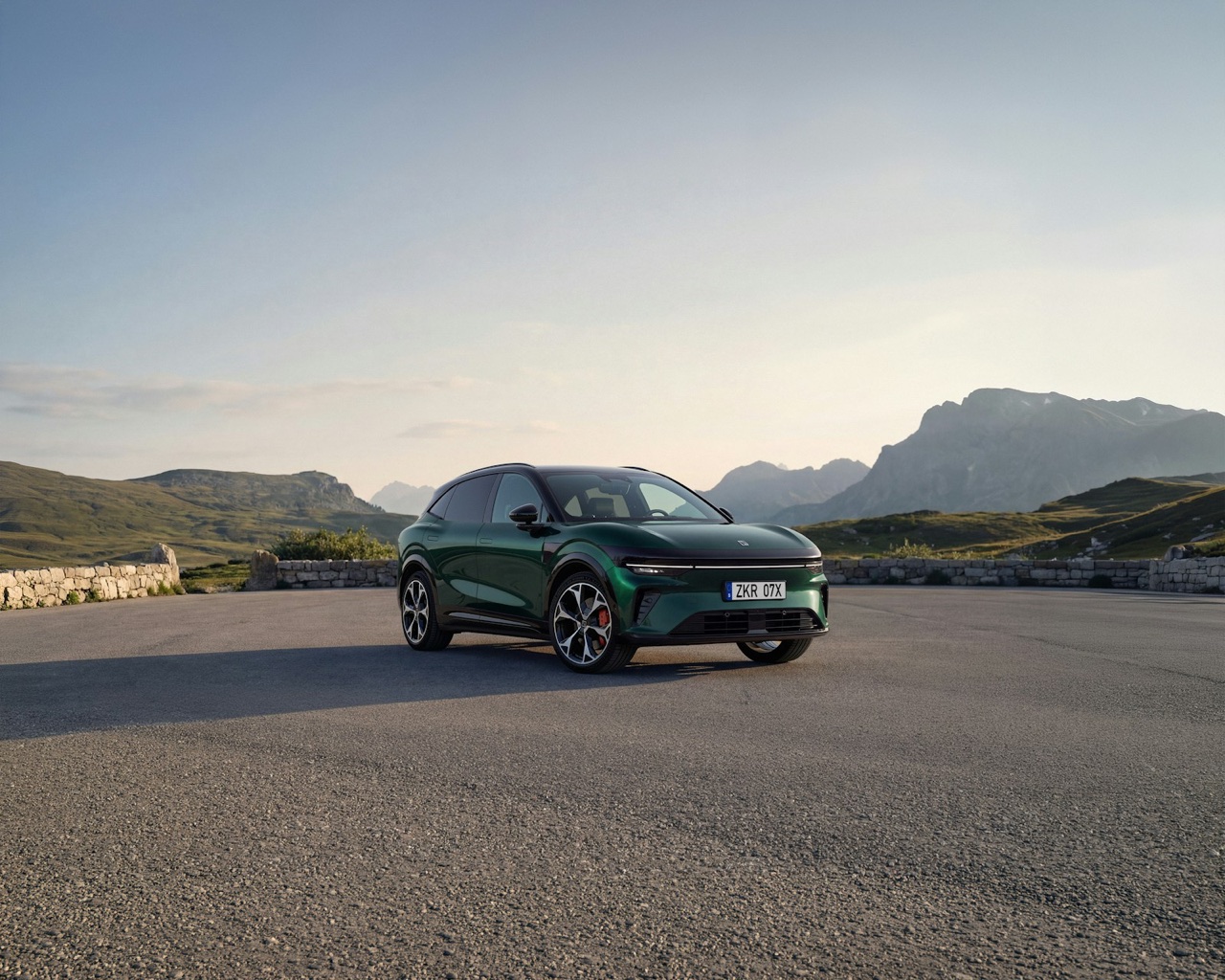
Chinese car brochures quote CLTC range, a slower city-heavy laboratory cycle. Europe uses WLTP, which runs faster and includes motorway cruising. On identical batteries, CLTC figures routinely read 15% to 30% higher than WLTP, as proven by the Zeekr 7X (620 km CLTC vs 482 km WLTP) and Xpeng G6 (725 km CLTC vs 535 km WLTP).
What makes CLTC so generous to electric motors
China's CLTC (China Light-duty Vehicle Test Cycle) models dense Chinese urban traffic with low average speeds, frequent stops and long pauses. Electric motors are extraordinarily efficient at low speed and recover energy through regenerative braking at every stop.
European WLTP (Worldwide Harmonised Light Vehicle Test Procedure) runs faster with a sustained high-speed phase. Aerodynamic drag squares with speed, draining an EV battery far faster on European ring roads and motorways.
Real like-for-like numbers from 2026 models
We do not need to guess the gap because several 2026 models publish both cycles on the same pack. The Zeekr 7X with the 75 kWh LFP pack is rated at 620 km on China's CLTC cycle, against 480 to 482 km on Europe's WLTP cycle, a difference of nearly 29%.
Similarly, the Xpeng G6 Long Range quotes 725 km CLTC in China against 535 km WLTP in Europe. As a practical rule of thumb, cut any Chinese CLTC figure by 20% to estimate WLTP, and cut it further for cold northern European motorway driving.
Hardware can differ between China and Europe too
Never assume the only change is the lab test. Makers frequently fit different battery chemistry, voltage architecture or motors to domestic builds. The China-market Zeekr 7X runs a 900V architecture with a 103 kWh pack and 585 kW dual motors, whereas the European 7X uses 800V, 75 or 100 kWh packs and up to 500 kW.
Likewise, China's Zeekr 9X offers a 70 kWh battery and 1,030 kW tri-motor Hyper trim, while the official European version ships with a 55.1 kWh pack and 660 kW.
How to compare cars without getting fooled
Always look past headline kilometres to usable battery capacity in kilowatt hours (kWh), charging voltage (400V, 800V or 900V) and independent European motorway tests. Kilowatt hours do not change when a ship crosses an ocean.